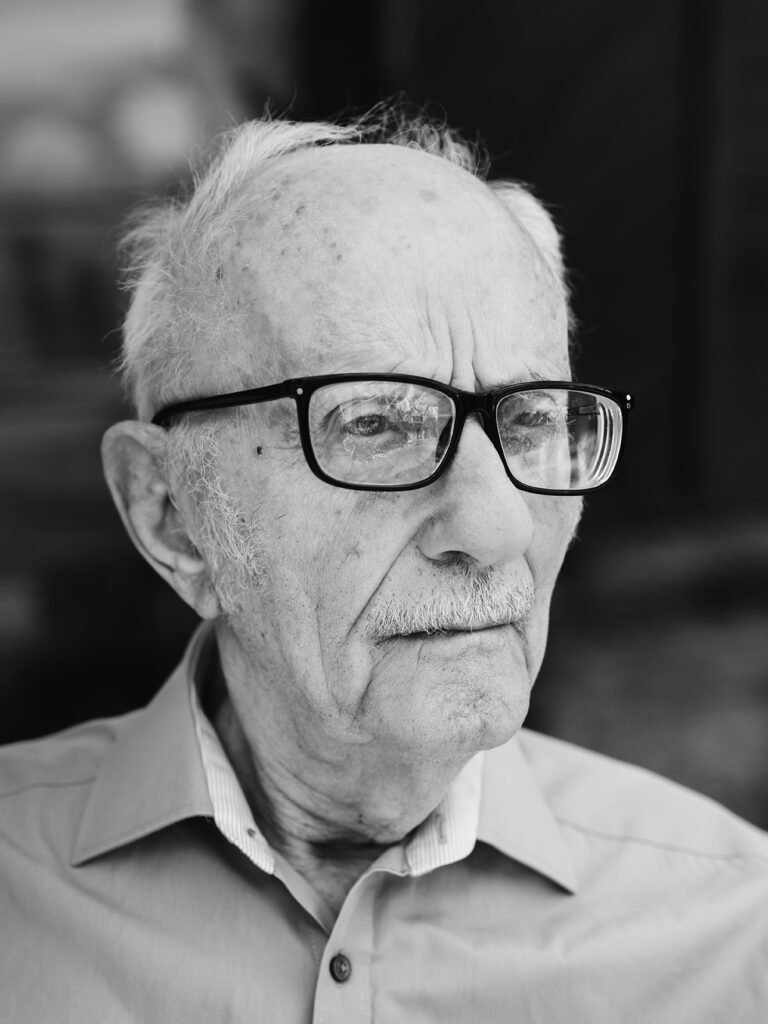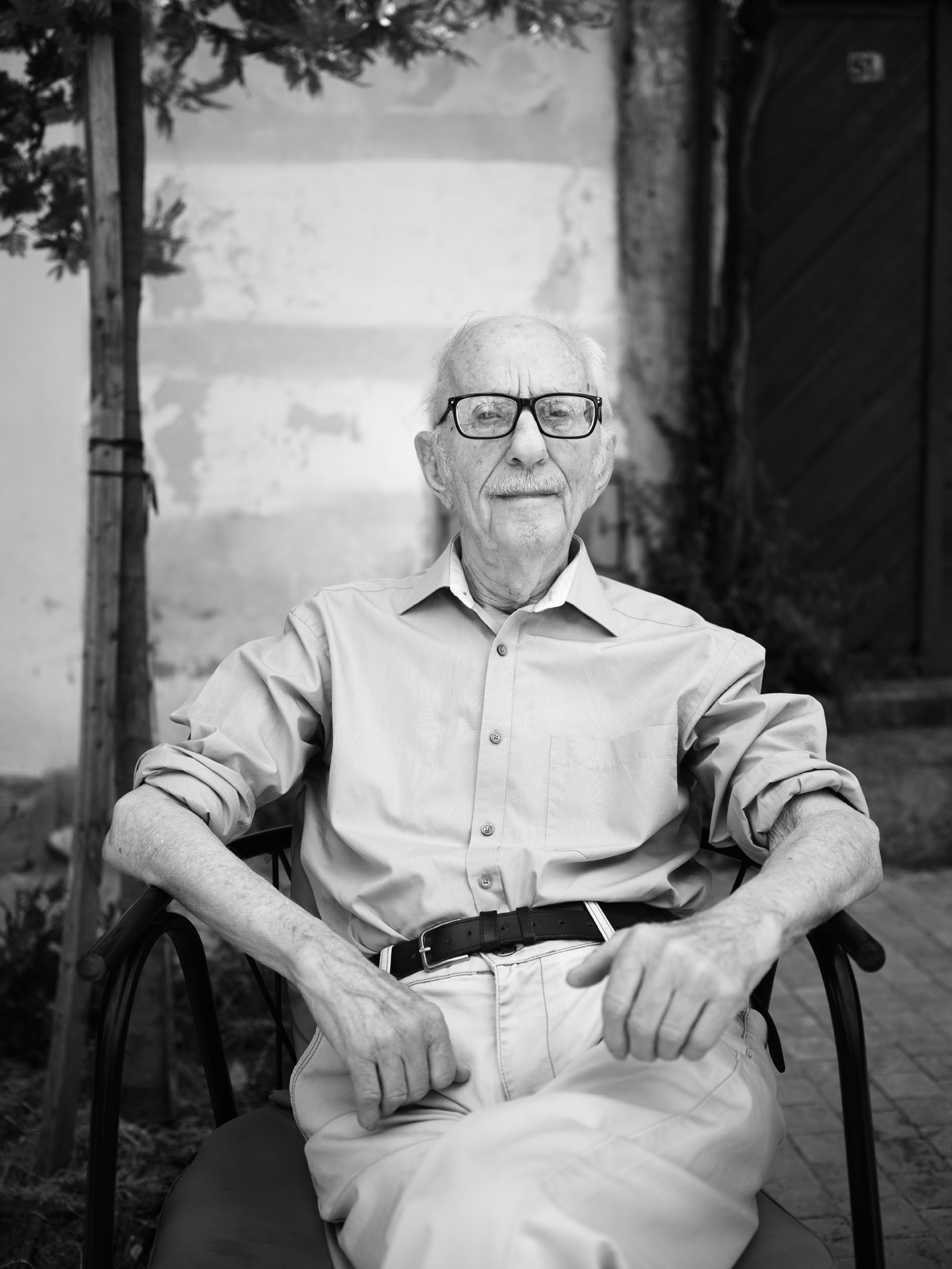
photographed in a sidestreet in Tirana
Born on April 15, 1929, in Athens, into an intellectual family, Lekë Tasi and his family endured numerous imprisonments under the communist regime. His father, a prominent politician from the 1920s, was sentenced in 1945 to 20 years in Burrel prison, where he served the full term. Later, his uncle, a former journalist, was also imprisoned in Burrel, where he died, his remains never found. Subsequently, both his brother and sister Tefta, one of Albania‘s first lyrical singers, were also imprisoned.
Lekë Tasi studied music and worked as a cellist in the Radio Orchestra, Philharmonic, and later in the Opera Theater from 1946 to 1967. At the height of the class struggle, he was dismissed from his job in 1967 for political reasons and worked on a farm until 1971. During this time, he began translating and painting.
In October 1975, he and his family were deported to Grabjan, Lushnja, where they spent 15 years. Tasi documented the personal and family struggles in his extensive book Grabjani rrëzë kodrave (Grabjan at the Foot of the Hills, 2009). He is also recognized as a painter, having exhibited his work both in Albania and abroad, and as a writer and publicist.