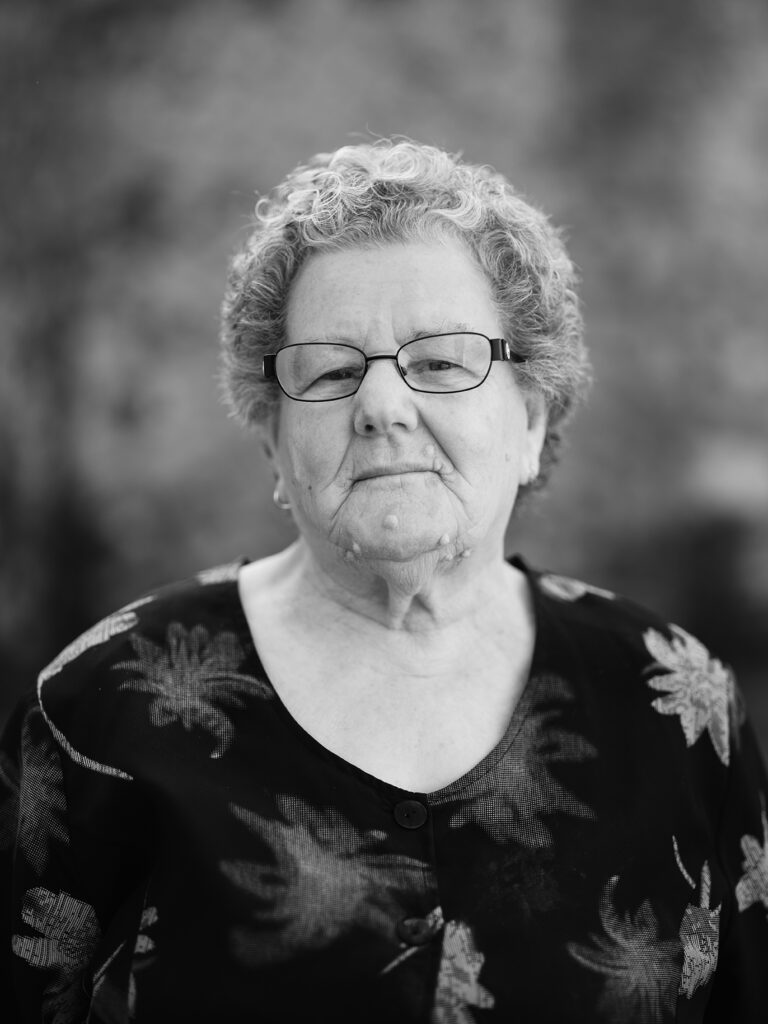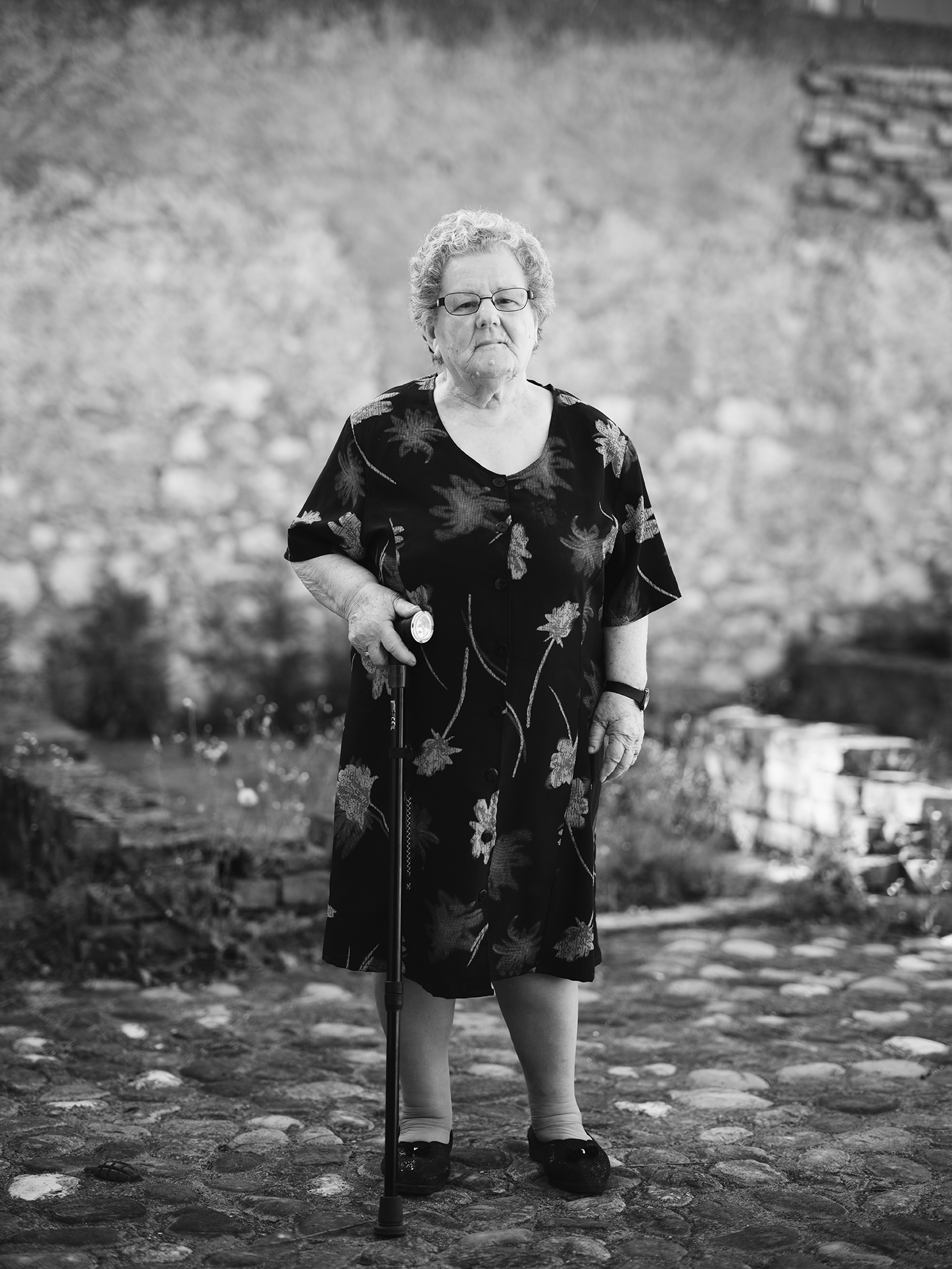
photographed in the Museum „Site of Witness and Memory“, Shkodra
“During communism, no one would visit us at home because of our bad biography.”
Born on September 28, 1937, in Shkodër, Lezina Gjuraj endured the consequences of her family’s persecution under the communist regime. In 1948, her brother, Din Delija, a Franciscan friar, escaped to Yugoslavia and later to Italy, where he became a renowned painter, spending the rest of his life in exile. Following his escape, the family was forcibly interned, first in Turan and later in the infamous Tepelena camp. Lezina was only 10 years old when she was sent to Tepelenë, where she lived for two and a half years under horrific conditions. After their release, she and her family returned to Shkodër, stripped of their right to education. Despite the hardships, Lezina worked as a cook to support her family, while her husband served as a teacher in remote villages.
Tragedy followed Lezina further when, in the 1980s, she lost her son, who was killed while serving in the military