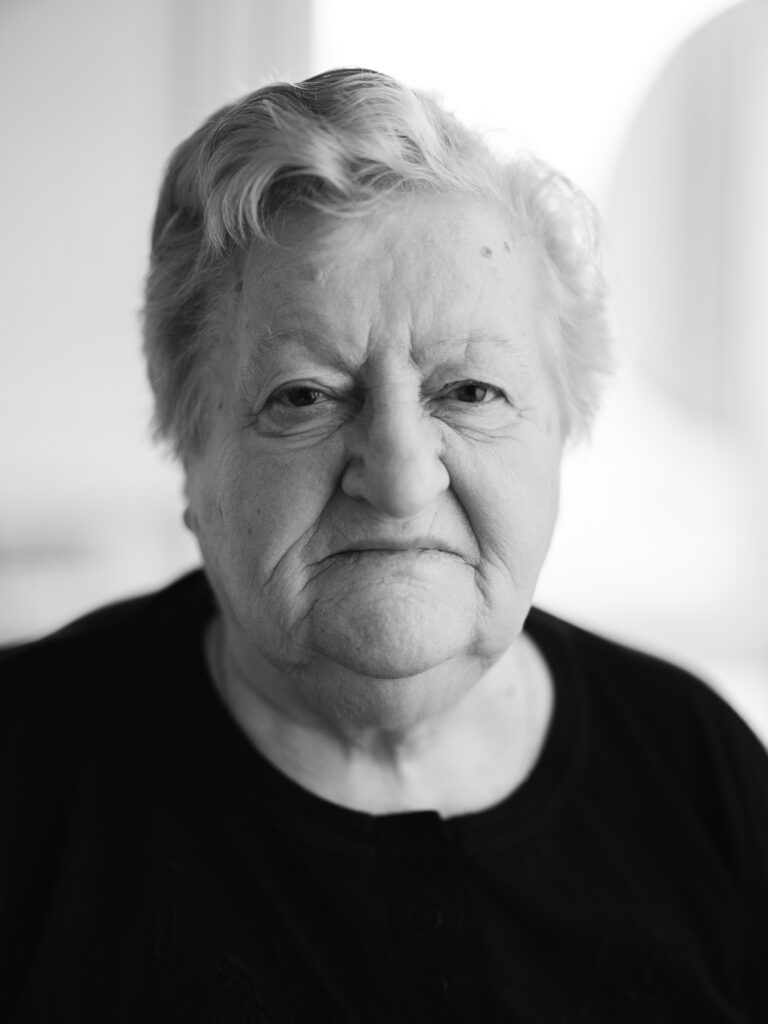
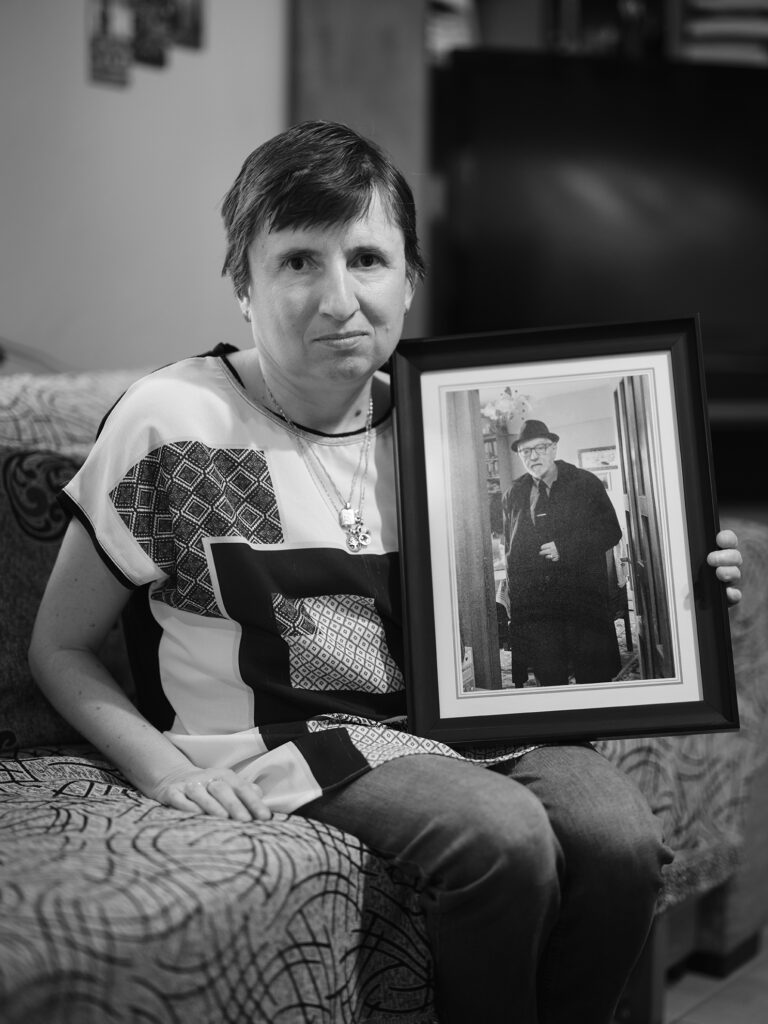
Shpresa & Fatbardha Merdani
photographed in her appartment in Korça
Born on December 14, 1942, in Korçë, Shpresa (Baholli) Merdani experienced the violence of the communist regime from a young age. Her father, a former émigré to the United States who had returned to invest in Albania, was labeled a “kulak” and had his property confiscated. In 1947, he was sentenced to death, but this was later commuted to 15 years in prison. Left alone with six children, Shpresa’s mother faced countless hardships as a result of her husband’s conviction.
Despite these challenges, Shpresa pursued her education and became a teacher. However, after eight years of teaching in Podgorie, Korçë, she was dismissed with the justification that “a kulak’s daughter could not work in education.” Following her dismissal, Shpresa was sent to work in agriculture in Shtyllë, Vithkuq, where her family had been interned. During her internment, she met and married Ylber Merdani, a former political prisoner who had served time in Spaç prison.
Life remained difficult for their family. Their daughter, Fatbardha, did not receive adequate medical care at birth due to her parents’ “declassed” status and faced lifelong health issues as a result.
After their internment ended, Shpresa and her family returned to live in Korçë, dedicating themselves to advocating for the rights of political prisoners. Shpresa and her husband, Ylber, worked in education until their retirement.